Post-coital contraception

In the 1960s and 1970s, high doses of DiEthylStilbestrol were used as post-coital contraception ; the morning-after pill

1985 Study Abstract

Current interceptive methods of contraception utilizable between ovulation and nidation include hormonal methods and IUDs. Since the 1st clinical study of the use of high doses of estrogen as a postcoital contraceptive appeared in 1967, the remarkable efficacy of the method has been confirmed by numerous other studies.

The most important series used 50 mg diethylstilbestrol (DES) or 5 mg ethinyl estradiol (EE) per day for 5 days beginning within 72 hours of unprotected intercourse. The mechanism by which estrogens exercise their interception are unclear, but there are probably several factors involved including luteolysis and anomalies in endometrial development. The method is highly effective but rates of nausea, vomiting, breast tenderness, and to a lesser degree menorrhagia are high. The incidence of extrauterine pregnancy is about 1 per 10 intrauterine pregnancies for any postcoital method. Estrogen postcoital contraception is preferable to DES because of the fear of genital adenosis or vaginal adenocarcinoma in case of failure of DES. Opinion is divided as to the teratogenic risks of high doses of estrogens in general.

Postcoital contraception with a progestin, levonorgestrel, which renders the endometrium inhospitable to nidation, was 1st described in 1973. The efficacy of norgestrel alone depends on the dose used. The most common secondary effects are spotting and cycle shortening. The method has the advantage of requiring a very small dose, but the disadvantage of requiring administration in the 12 hours following intercourse. Several combinations of estrogens and progestins have been proposed for postcoital use, of which the most interesting consists of 1 mg of dl-norgestrel and 100 mcg of EE repeated exactly 12 hours later. The treatment should be administered within 12 hours of unprotected intercourse. A multicenter study of 692 women treated with this method gave a pregnancy rate of 1.6%, which would have been lower if 4 women not meeting the conditions of treatment had been excluded. 52.7% of women treated had nausea or vomiting. Compared to estrogens alone, the EE-Norgestrel combination takes less time, requires 4 pills instead of 50 or 60, is better tolerated overall, and requires much less estrogen.

Postcoital insertion of an IUD is very effective and has the advantages that it can be used later than 72 hours following intercourse, it is the only method currently available in case OCs are contraindicated, it allows subsequent longterm effective contraception, and it is 100% effective. The major disadvantages are pain on periovulatory or postovulatory insertion and the risk of infection. Possible future hormonal methods of postcoital contraception based on use of anti-progesterone steroids, especially RU486, or of luteinizing hormone releasing hormone agonist are currently under development.

Sources

  • Post-coital contraception, Contraception, fertilite, sexualite, NCBI PubMed PMID: 12280207, 1985.
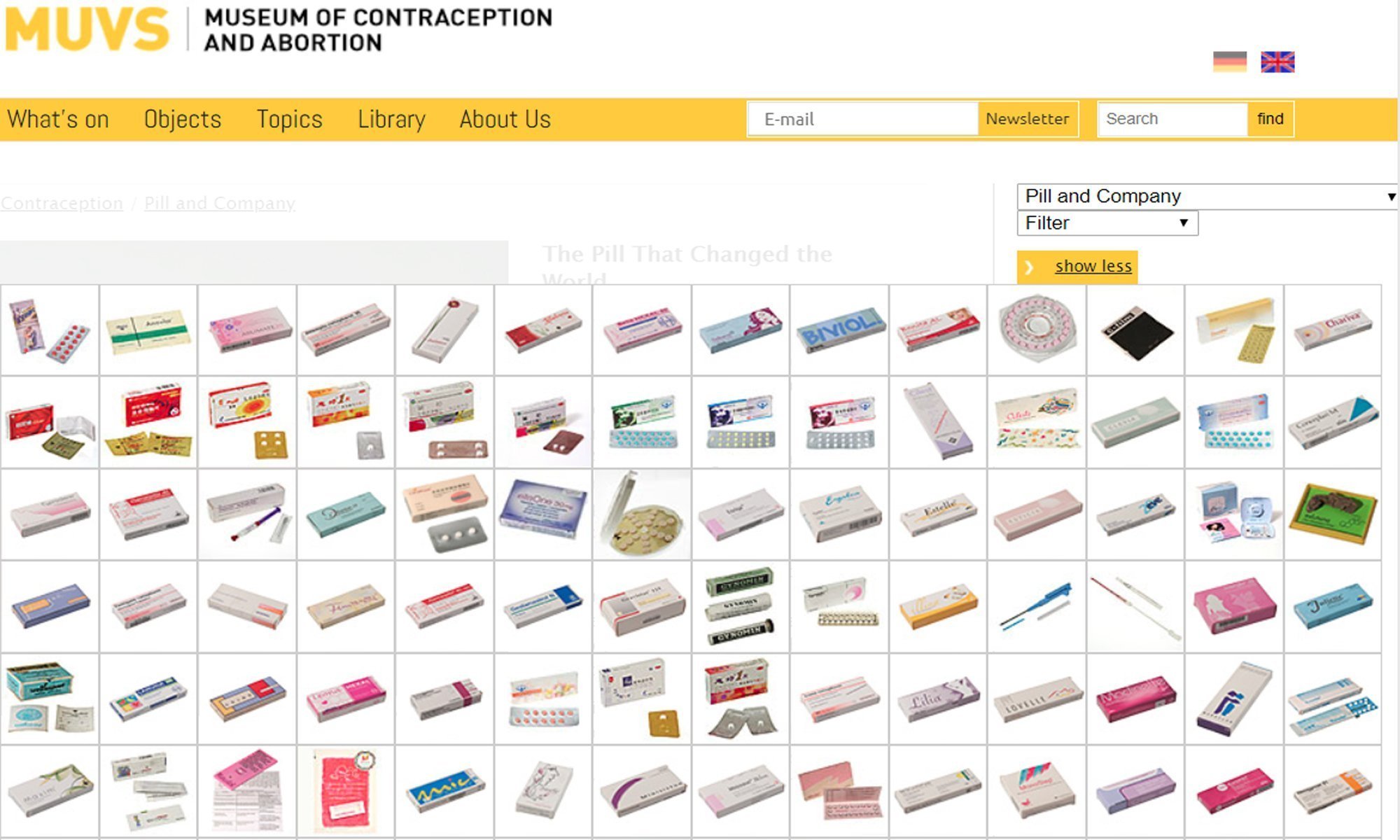
  • Featured image Museum of Contraception and Abortion.
DES DIETHYLSTILBESTROL RESOURCES

Postcoital contraceptive

In 1973, the FDA considered DES safe as ‘morning-after’ pill

1983 Study Abstract

Postcoital contraceptives, the so-called “morning after pill,” are agents used as emergency treatment to prevent pregnancy after unprotected intercourse or contraceptive accidents.

In the 1960s and early 1970s high doses of estrogens were used in 5-day courses such as diethylstilbestrol 25-50 mg a day or ethinyl estradiol 0.5-5 mg a day begun within 72 hours after coitus. Although effective, a considerable drawback of the associated nausea and vomiting as well as an increased risk of menstrual disturbance during the treatment cycle.

Norgestrel alone in various dosages has been used postcoitally.

Quingestanol has been used as a continuing postcoital agent in Latin America but proved unacceptable owing to nausea and irregular bleeding.

In China “visiting pills” have been devised containing anordrin. In the West regimens of this sort have been superseded by the Yuzpe treatment of 100 mcg ethinylestradiol and 0.5 mg levonorgestrel initially, repeated after precisely 12 hours. The treatment must be initiated within 72 hours of exposure.

Postcoital contraceptives act by combinations of mechanisms–the function of the corpus luteum is disrupted, tubal motility may be affected, and changes in endometrial biochemistry prevent ovoimplantation. In a multicenter trial involving 602 women Yuzpe reported a pregnancy rate of 1.6%. Other workers show comparable figures of 0-3%. The primary side effects of the current hormonal method are nausea, which occurs in 61% of cases, and vomiting, 20% of cases. Both are mild and of short duration.

All postcoital methods carry a risk of ectopic pregnancy should the treatment fail. 3 ectopic pregnancies were recorded with diethylstilbestrol and 1 recently with the Yuzpe regimen. There have been no reports of thromboembolic complications.

If a hormonal form of postcoital treatment fails, the theoretical possibility of the pregnancy being harmed cannot be ruled out. The patient needs to be counseled about this, and careful records should be kept. Also important is the taking of an accurate menstrual and coital history to exclude exposures earlier in the menstrual cycle.

Lippes and coworkers showed the efficacy of copper IUDs as postcoital agents. These can be used up to 5 days from intercourse. An IUD is preferred if hormones are contraindictated, if exposure was more than 72 hours beforehand, if the woman desires the most effective method, and if she wants the IUD for longterm contraception.

Postcoital contraception, however defined, raises ethical questions. Postcoital methods could be classed as contraceptive rather than abortive within the maximum period (defined by medical scientific consensus) that may elapse between intercourse and nidation.

Sources

DES DIETHYLSTILBESTROL RESOURCES

Physician notes hazards of DES use to prevent pregnancy

Despite growing controversy surrounding its use as a “morning after pill,” diethylstilbestrol (DES) is prescribed liberally for rape victims

1978 Paper Abstract

Diamond questions the use of DES (Diethylstilbestrol) as a method of pregnancy prevention after rape because of

  • the increased risks of vaginal cancer in women exposed to DES in vitro;
  • the relationship to congenital anomalies and to endometrial carcinoma;
  • and the actual number of pregnancies resulting from rape.

According to Diamond, studies have shown that an insignificant number of pregnancies occur because of rape and to support this claim he cites a study conducted in Minnesota where 4,000 rapes resulted in 0 pregnancies. Diamond also assails the Catholic health care institutions which permit the use of DES as a postcoital contraceptive claiming that they are in actuality performing early abortion by medication.

Sources

  • Physician notes hazards of DES use to prevent pregnancy, Hospital progress, NCBI PubMed PMID: 631811, 1978 Mar.
  • Featured image lighthouseprc.
DES DIETHYLSTILBESTROL RESOURCES

DES mode of action as contraceptive agent

Letter: The “morning after” pill, 1973

Abstract

The use of diethylstilbestrol (DES) as a postcoital contraceptive agent is discussed.

DES is associated with nausea, an increased risk of thrombosis, and is suspect in endometrial and breast cancer, and vaginal cancer in the progeny of mothers treated during pregnancy.

Postcoital estrogens do not seem to be as effective as conventional oral contraceptives. Although DES is most likely not an abortifacient agent, its mode of action is not certain. Nonetheless, the relatively high number of ectopic pregnancies among method-failures suggests that DES delays ovum transport.

It is concluded that routine postcoital use of DES is too hazardous, and that abortion is strongly indicated if the method fails.

Sources

  • Letter: The “morning after” pill, The Medical journal of Australia, NCBI PubMed PMID: 4765882, 1973 Nov.
  • Featured image hopectr.
DES DIETHYLSTILBESTROL RESOURCES

Diethylstilbestrol as a “morning after” contraceptive

In 1973, the FDA considered DES safe as ‘morning-after’ pill

Abstract

Diethylstilbestrol (DES) is a nonsteroidal synthetic estrogen. It has been approved as a “morning-after” contraceptive.

It is thought to interfere with the implantation of the fertilized ovum. Among 5593 women treated with DES or other estrogens, 26 pregnancies have been reported. Most of these patients reported midcycle exposures.

Of 92 patients with adenocarcinoma of the vagina or cervix, prenatal histories of 66 were obtained. The mothers of 49 of them had taken DES or related nonsteroidal estrogens during pregnancy. In 1 case the mother had received only 1.5 mg daily. Another mother was treated for only 5 days during the first trimester. There is no evidence that the use of DES increases the risk of cancer in the mother.

The Food and Drug Administration has approved the use of DES as an emergency treatment only. Early therapeutic abortion is recommended when this use of DES fails, because of the possibility of a teratogenic effect.

The recommended oral dosage is 25 mg twice daily for 5 consecutive days, begun within 72 hours after sexual exposure. Severe nausea and vomiting may occur. Headaches and menstrual irregularities have also been reported.

Sources

  • Diethylstilbestrol as a “morning after” contraceptive, The Medical letter on drugs and therapeutics, NCBI PubMed PMID: 4740292, 1973 Jun 6.
  • Featured image stayathomemum.
DES DIETHYLSTILBESTROL RESOURCES

FDA considers DES safe as ‘morning-after’ pill

25 mg of DES twice daily for five days…

Abstract

Food and Drug Administration approval of labeling for diethylstilbestrol (DES) as a postcoital contraceptive is reported.

DES is considered safe only as an emergency contraceptive measure.

The recommended dose is 25 mg twice a day for 5 days.

Treatment should be initiated 24-72 hours after coitus. It is important that the full regimen be completed, even if nausea, which is common with oral DES, is present.

There is yet no evidence that DES poses a significant carcinogenic risk to the mother or the fetus. However, if treatment fails, abortion should be seriously considered because of possible teratogenic effects or carcinoma in female offspring.

Medical News, June 18, 1973

Labeling for diethylstilbestrol (DES) has been approved to recommend restricted use of the drug as a “morning-after” contraceptive.

The Food and Drug Administration said it considers DES safe for this use “only as an emergency measure,” and warned against routine or frequent use of the drug as a contraceptive. This means, according to the FDA statement, that DES should be considered only in situations such as rape and incest, or where, in the physician’s judgment, the patient’s physical or mental well-being is in jeopardy.

The efficacy of DES in preventing pregnancy depends both on the dosage and time lapse after coitus. The recommended dosage is 25 mg twice daily for five days, preferably beginning within 24 hours and not later than 72 hours after coitus.

“When this dosage is given within the specified time interval after sexual intercourse, DES is highly effective in preventing conception,” FDA said. “But the patient must be warned to take the full course of the drug in spite of the nausea which commonly occurs, if it is to be effective.”

The agency urged physicians to inform patients or guardians of the possible side-effects of DES, and of alternative measures and their hazards.

“There is at present no positive evidence that the restricted postcoital use of DES carries a significant carcinogenic risk, either to the mother or fetus,” according to the FDA’s latest (May) Drug Bulletin.

If DES treatment fails, however, there should be “serious consideration of voluntary termination of pregnancy,” FDA said. This is because data support the possibility of delayed appearance of carcinoma in females whose mothers have been given DES later in pregnancy, and because teratogenic and other adverse effects on the fetus are not yet well understood.

Sources

  • FDA considers DES safe as ‘morning-after’ pill, JAMA Network PMID: 12257949, 1973 Jun.
  • More about DES (as Emergency contraception) and the FDA on wikivisually (mid-page).
  • Featured image TS Radio.
DES DIETHYLSTILBESTROL RESOURCES

Postcoital Contraception With DES

Postcoital Contraception With Diethylstilbestrol, 1971

Abstract

A follow-up study was made of 1000 women of child-bearing age who were given, within 72 hours of sexual exposure, 25 mg of diethylstilbestrol twice daily for 5 days, by the University of Michigan Health Service in 1967, to determine frequency and nature of side effects and the character of the following menses.

No pregnancies resulted and no serious side effects were reported. 44% of the participants reported slight or intermittent nausea; 31.5% reported no side reactions at all.

40% of the participants had normal menses following use of the diethylstilbestrol, and no serious irregularities were reported.

Tables are also provided giving time of sexual exposure in relation to the menstrual cycle, and the prophylaxis used in the individual case, if any.

Patients were reminded that diethylstilbestrol is an emergency contraceptive treatment and were encouraged to seek other means of contraception if regularly needed.

Sources

  • Postcoital Contraception With Diethylstilbestrol, JAMA Network PMID: 12275928, October 25, 1971.
DES DIETHYLSTILBESTROL RESOURCES

DES use as postcoital contraceptive agent

Clinical effectiveness and potential mode of action

1973 Abstract

Tubal motility, oviduct flow, and ciliary activity are all influenced by estrogens. Tubal insufflation studies suggest that estrogens cause closure of the uterotubal junction in women. Estrogen action may reflect a release from modifications imposed by progesterone and may threaten the functional integrity of the corpus luteum under hypothalamic-hypophyseal control.

Board and Bhatnagar have shown reduced progesterone levels with administration of diethylstilbestrol. Decrease of BBT following use of ethinyl estradiol and diethylstilbestrol support the theory of the luteolytic action of estrogen. After nidation, estrogens have no effect.

Haspels reported on 2000 women treated with ethinyl estradiol (2-5 mg) or diethylstilbestrol (25-50 mg) administered for 5 consecutive days. Method failure was reported with 3 mg/day ethinyl estradiol and 25-30 mg/day diethylstilbestrol. No pregnancies were reported at 5 mg/day ethinyl estradiol and 50 mg/day diethylstilbestrol. Kuchera reported on 1000 cases with no pregnancies following treatment with 50 mg diethylstilbestrol administered within 72 hours of unprotected coitus (for a pregnancy rate of 2.5/1000).

Other estrogens have been used successfully as postcoital contraceptive agents. Use of conjugated equine estrogens administered orally or intravenously within 72 hours of exposure prevented pregnancy. Dienestrol and dienestrol combined with ethynodiol acetate (progestogen) prevented pregnancy. Depot estradiol administered to 12 patients resulted in 2 ectopic pregnancies. Slow release of this estrogen could account for its high failure rate, although results suggest an effect on zygote transport. It is concluded that the best protection against pregnancy will be obtained by administering estrogen as soon as possible after coitus (preferably within 24 hours, no later than 72 and continued for 5 consecutive days).

Sources

  • The use of estrogens as postcoital contraceptive agents. Clinical effectiveness and potential mode of action, American journal of obstetrics and gynecology, NCBI PubMed PMID: 4577932, 1973.
  • Featured image wikipedia.
DES DIETHYLSTILBESTROL RESOURCES

The “morning-after pill”, a preliminary report

DES as postcoital contraception

1969 Abstract

Oestrogens increase uterine secretion rate, contractility of tubal and uterine muscle, and closure of the isthmo-ampullar and uterotubal junctions. It may cause either “tubelocking” or accelerated transport, depending on the time the oestrogens are given, and on their dosage.

In 72 women, either victims of rape, or woman whose partners had used condoms that failed, oestrogens were given within 48 hours of coitus.

The dosage was either 5 mg of stilboestrol 5 times daily for 5 days, or 1 mg of ethinyloestradiol twice daily for 5 days.

About 1/2 the women had been exposed to the possible effects of unprotected coitus between 12 and 16 days before the time of their next expected period. No pregnancies were seen with the above dosages. There were 2 pregnancies where the doctor had prescribed 1 mg of ethinyloestradiol daily instead of the 2 mg advised.

Nearly all the women developed nausea at 1st, and 3 of them vomited up their tablets. These were given daily injections of 2 ampoules of 12.5 mg of dimenformon forte instead.

At present patients are advised, as a routine, to take an antiemetic, such as 1/2 a tablet of avomine, 1/2 an hour before taking the oestrogen. A gynaecologist has been one ectopic pregnancy in a patient for whom he had prescribed 25 mg of stilboestrol daily for 8 days.

By inhibiting oestrogen synthesis, oestrogens given as described here may act as antioestrogens and so interfere with the delicate hormone balance required in the regulation of the isthmo-ampullar junction of the tube. Which dosage will accelerate ovum transport and hence premature arrival in the uterus, resulting in ovum degeneration, and which dosage will produce delayed ovum transport (“tube locking”) is not yet clear. Other mechanisms may be withdrawal bleeding or interference with implantation.

Sources

  • The “morning-after pill”–a preliminary report, IPPF medical bulletin, NCBI PubMed PMID: 12275493, 1969.
  • Featured image sliceofpattie.
DES DIETHYLSTILBESTROL RESOURCES

DES as postcoital contraception

IPPF medical bulletin, 1967

Abstract

Estrogens have been used as postcoital contraceptives with success.

Of 100 women who had midcycle coitus and were given stilbesterol or ethynyl estradiol for 4 or more days, none became pregnant.

Estrogen administration lowered basal body temperature, and endometrial biopsies showed retarded endometrium.

Nausea was present among 40% of the women and 12% experienced breast soreness.

The hypothesised mechanisms of action include: accelerated ovum transport, change in stickiness of the blastocyte, and changes in the implantation site, all leading to the prevention of implantation.

Sources

DES DIETHYLSTILBESTROL RESOURCES